16 Results for "

Mitragyna speciosa Korth.

" in MedChemExpress (MCE) Product Catalog:
Products (16)

16 Results for "Mitragyna speciosa Korth." in MCE Product Catalog:

8
8 Cited Publications
Cat. No.: HY-103306
CAS No.: 15662-33-6
Purity:  99.35%
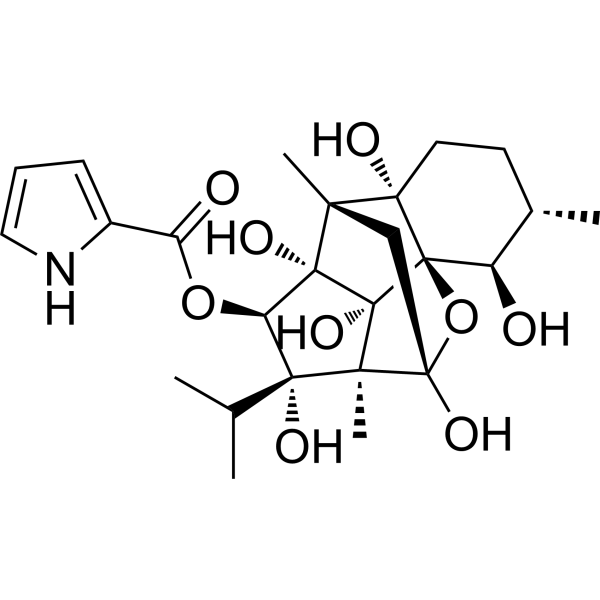
Ryanodine is a cell permeant ryanodine receptor modulator. Ryanodine can either stimulate or inhibit Ryanodine-mediated Ca 2+ release depending on its concentrations. Poisonous diterpenoid found in Ryania speciosa.
Cat. No.: HY-124412
CAS No.: 4697-66-9
Paynantheine is an alkaloid with antinociceptive activity, which is found in Mitragyna speciosa. Paynantheine is also a 5-HT1AR and 5-HT2BR agonist that induces lower lip retraction and antinociception in rats .
Cat. No.: HY-124412S
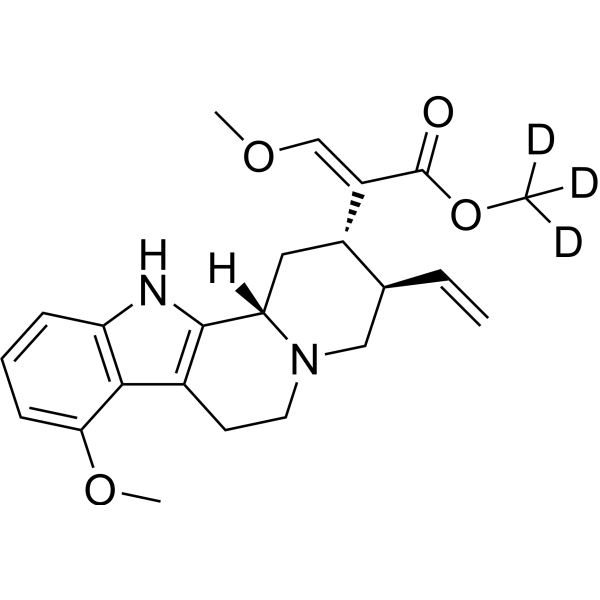
Paynantheine-d3 is a deuterium labeled Paynantheine. Paynantheine is an alkaloid that can be isolated from Mitragyna speciosa. Paynantheine can decrease alcohol intake in mice .
Cat. No.: HY-N16511
CAS No.: 101489-38-7
Isorengyol (Compound 4) is an ethylcyclohexane derivative found in Sinningia speciosa Fyfiana .
Cat. No.: HY-N7010
CAS No.: 57906-85-1
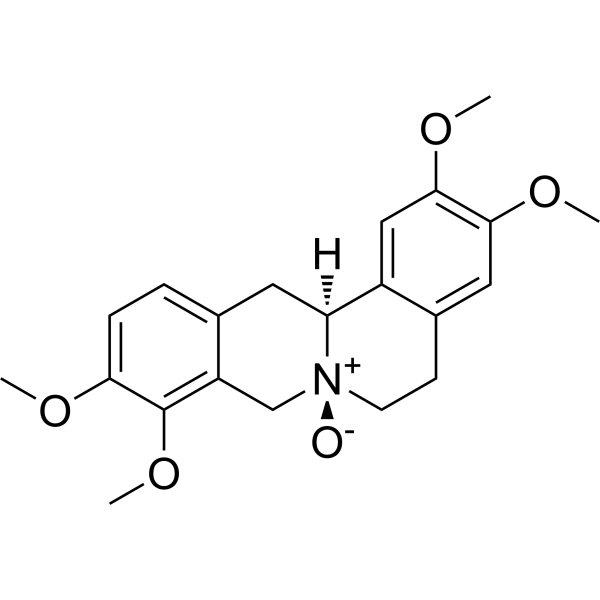
(-)-Corynoxidine is an acetylcholinesterase inhibitor with an IC50 value of 89.0 μM, isolated from the aerial parts of Corydalis speciosa . (-)-Corynoxidine exhibits antibacterial activities against Staphylococcus aureus and methicillin-resistant S. aureus strains in different degrees .
Cat. No.: HY-N6844
CAS No.: 22518-07-6
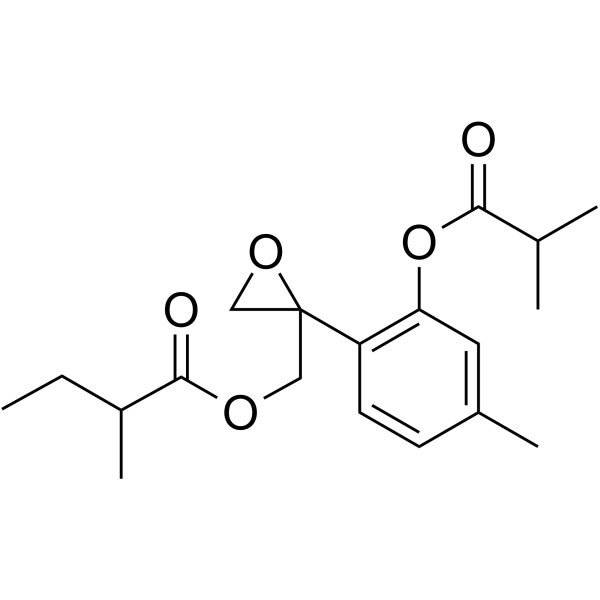
8,9-Epoxy-3-isobutyryloxy-10-(2-methylbutanoyl)thymol is a chemical composition of essential oils from Telekia speciosa. 8,9-Epoxy-3-isobutyryloxy-10-(2-methylbutanoyl)thymol also shows marked antipro-liferative activity against human cancer cell lines in vitro .
Cat. No.: HY-N15330
CAS No.: 101915-75-7
Aspecioside is a glycoside that can be isolated from Asclepias speciosa .
Cat. No.: HY-N1206
CAS No.: 72514-90-0
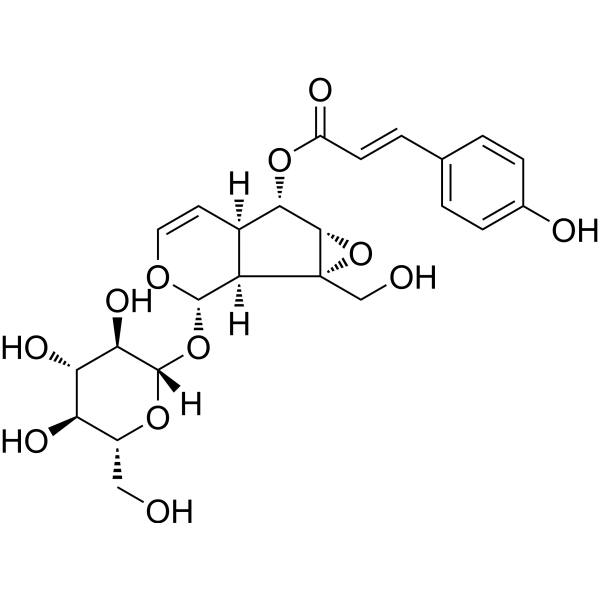
Synonyms: 6-O-(E)-p-Coumaroylcatalpol
Specioside is a novel iridoid glycoside extracted from Catalpa speciosa Warder (Bignoniaceae) .
Cat. No.: HY-N9218
CAS No.: 182132-59-8
Quinovic acid 3-O-(3',4'-O-isopropylidene)-β-D-fucopyranoside is a Triterpenoids product that can be isolated from the herbs of Mitragyna rotundifolia .
Cat. No.: HY-N19071
Category:  

Extract

Target:  

Bacterial

Lagerstroemia speciosa extract, derived from the crape myrtle tree, contains active ingredients including corosolic acid, ellagic acid, and flavonoids. It possesses anti-inflammatory, antioxidant, and antibacterial properties, helping to reduce inflammation, combat oxidative stress, and enhance overall immunity.
Cat. No.: HY-N19856
CAS No.: 1032964-19-4
Millettiaspecoside A is a phenolic glycoside found in the caulis of Millettia speciosa. Millettiaspecoside A can be used in research related to joint pain .
Cat. No.: HY-N18300
CAS No.: 3056651-89-6
Protocatechuic acid-2-glucoside (compound 6) is a phenolic acid glycoside. Protocatechuic acid-2-glucoside can be found in the rhizome and radix of Millettia speciosa Champ .
Cat. No.: HY-N19858
CAS No.: 562070-89-7
Millettiasaponin B is an oleanane-type triterpene saponin found in the roots of Millettia speciosa. Millettiasaponin B can be used in leukemia research .
Cat. No.: HY-N19857
CAS No.: 562070-88-6
Millettiasaponin A is an oleanane-type triterpenoid saponin found in the stems of Derris eriocarpa and roots of Millettia speciosa. Millettiasaponin A is 150 times sweeter than Sucrose (HY-B1779) at 1% concentration. Millettiasaponin A can be used in research on hypertension and obesity. .
Cat. No.: HY-N17851
CAS No.: 96400-39-4
Quercetin 3-O-β-glucopyranoside uronic acid 7-O-β-glucopyranoside (Compound 1) is a flavonoid glycoside found in the leaves of Alchemilla speciosa .
Cat. No.: HY-N16779
CAS No.: 40041-96-1
Angustine is a monoterpene indole alkaloid vasodilator. Angustine exhibits potent vasodilatory activity on isolated rat aorta at a concentration of 10 μM (vasodilation rate exceeding 90%). Angustine can be used in the study of diseases such as hypertension, cerebral vasospasm, and peripheral circulatory disorders. Angustine can be naturally extracted from the bark of Nauclea officinalis and is also present in plants of the genera Mitragyna, Uncaria, and Strychnos .
  • 1

